
The word MDR is suddenly driving share prices of Paytm and Pine Labs.
But for most investors, the bigger question is: What exactly is MDR, and why can it have such a big impact on these companies? Let’s break it down.
First, what exactly is MDR?
MDR stands for Merchant Discount Rate.
In simple terms, whenever you swipe or tap your credit card after dinner or while shopping, the merchant pays a small fee on that transaction.
This fee is then shared among different players in the payment ecosystem, including the payment processor/acquirer, card network and issuing bank.
For credit card transactions, MDR typically ranges between 1% and 3%, depending on the type of card and transaction.
But UPI is a completely different story.
Why has UPI always been free for merchants?
Under the Finance Act, 2019, effective January 1, 2020, merchants cannot be charged a fee for transactions made through UPI and RuPay debit cards.
This effectively created the Zero-MDR model for UPI.
So, while credit card transactions can generate MDR, UPI transactions have remained free for merchants. And that became a big deal as UPI exploded in popularity. The scale of UPI is massive Just look at the numbers.
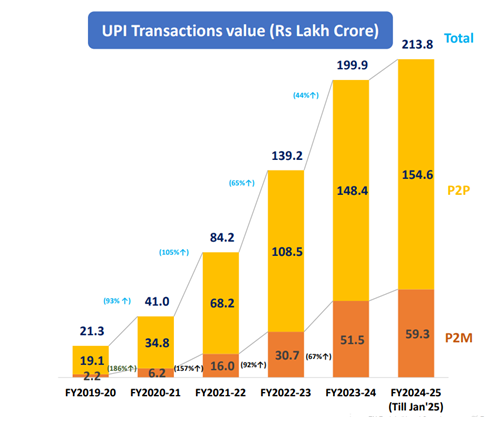
In July 2026 alone, UPI processed around 23.66 billion transactions worth nearly ₹29.88 lakh crore.
That is an enormous amount of payment activity happening through an infrastructure that, for merchants, has essentially been free.
But free for the merchant doesn’t mean free to operate.
There are costs involved at every step: technology infrastructure, servers, customer support, risk management, fraud prevention and payment processing.
These costs are ultimately borne by various players across the ecosystem, including banks, NPCI, and payment processors.
And as transaction volumes continue to rise, so do these costs.
This is why the debate around Zero MDR has been going on for years.
SBI Chairman CS Setty recently highlighted this issue, noting that the increase in UPI transaction volumes is putting additional pressure on banks’ IT systems and operating costs.
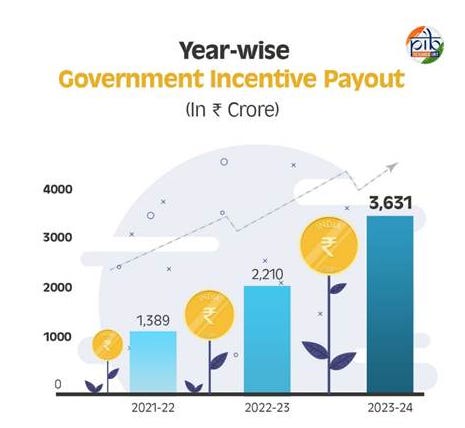
In other words, UPI has become incredibly large, but the revenue model supporting that infrastructure has not grown alongside it.
So, for years, voices in the industry have been saying that this Zero MDR is unsustainable as transactions kept growing and costs kept rising. The industry is dependent on government subsidies and the banks, payment infrastructure companies investing their money to run the UPI and for the growth of digital payments till the last mile of every Indian town and village.
So, why is everyone talking about MDR now?
This is where the latest development comes in.
A recent government bill introduced in the Lok Sabha proposes changes that could allow banks and payment service providers to levy charges on merchants for UPI and other electronic transactions. But there is an important catch.
This does not mean UPI will suddenly become a paid service.
The government has clarified that if MDR is introduced, it would apply only to a limited set of merchant transactions above a certain threshold, and at a nominal rate that would be much lower than the MDR currently charged on credit and debit card transactions.
The vast majority of UPI transactions would continue to remain free for merchants.
Consumers would also not be charged for making UPI payments, while person-to-person transactions would continue to remain free.
So, this is not about making UPI expensive.
It is more about creating a sustainable revenue model for the UPI ecosystem. And this distinction is important.
India is now entering the next phase of digital payments growth. UPI is expanding beyond major cities into smaller towns and rural areas, while transaction volumes continue to increase.
For that growth to continue, the infrastructure behind UPI also needs a sustainable business model.
And this is where Paytm and Pine Labs come in: This is probably the most important part for investors.
If MDR is eventually introduced on qualifying merchant UPI transactions, Paytm and Pine Labs could be among the biggest listed beneficiaries. Why?
Because both companies already have a large merchant network through their POS terminals, QR codes and soundboxes.
They are already sitting at the point where the merchant and payment ecosystem meet.
So, even a very small fee on a very large transaction base can potentially create a meaningful revenue opportunity.
And analysts are already trying to quantify what this could mean.
Bernstein estimates that a 5 bps net take rate for Paytm on qualifying UPI P2M transactions could increase FY28 PBT by roughly 27%.
Jefferies estimates a potential 15–35% upside to Paytm’s FY28 EBITDA and PBT, depending on the final MDR band.
For Pine Labs, Jefferies estimates a potential 10–23% increase in FY28 EBIT.
The actual impact will depend on the final MDR structure, qualifying transactions, and the rate eventually allowed.
Our Takeaway:
This is why the market reacted so strongly to the MDR news today. The market isn’t simply betting on a new fee.
It is looking at what happens when you apply even a tiny take rate to one of the world’s largest digital payment ecosystems.
For companies like Paytm and Pine Labs, which already have a large merchant base and payment infrastructure in place, this could potentially turn a massive transaction ecosystem into a new revenue and profit pool.
Of course, there are still several unanswered questions:
-What will be the final MDR?
-Which transactions will qualify?
-What will be the threshold?
And most importantly, how much of that MDR will actually flow through to payment service providers? These details will ultimately determine how big the opportunity really is. But the direction is what the market is currently focusing on.
Disclaimer — This article is for information purposes only and should not be considered investment advice or a recommendation to buy or sell any security. Please conduct your own research or consult a qualified financial advisor before making any investment decision. Reco Wealth is a SEBI-registered Research Analyst.